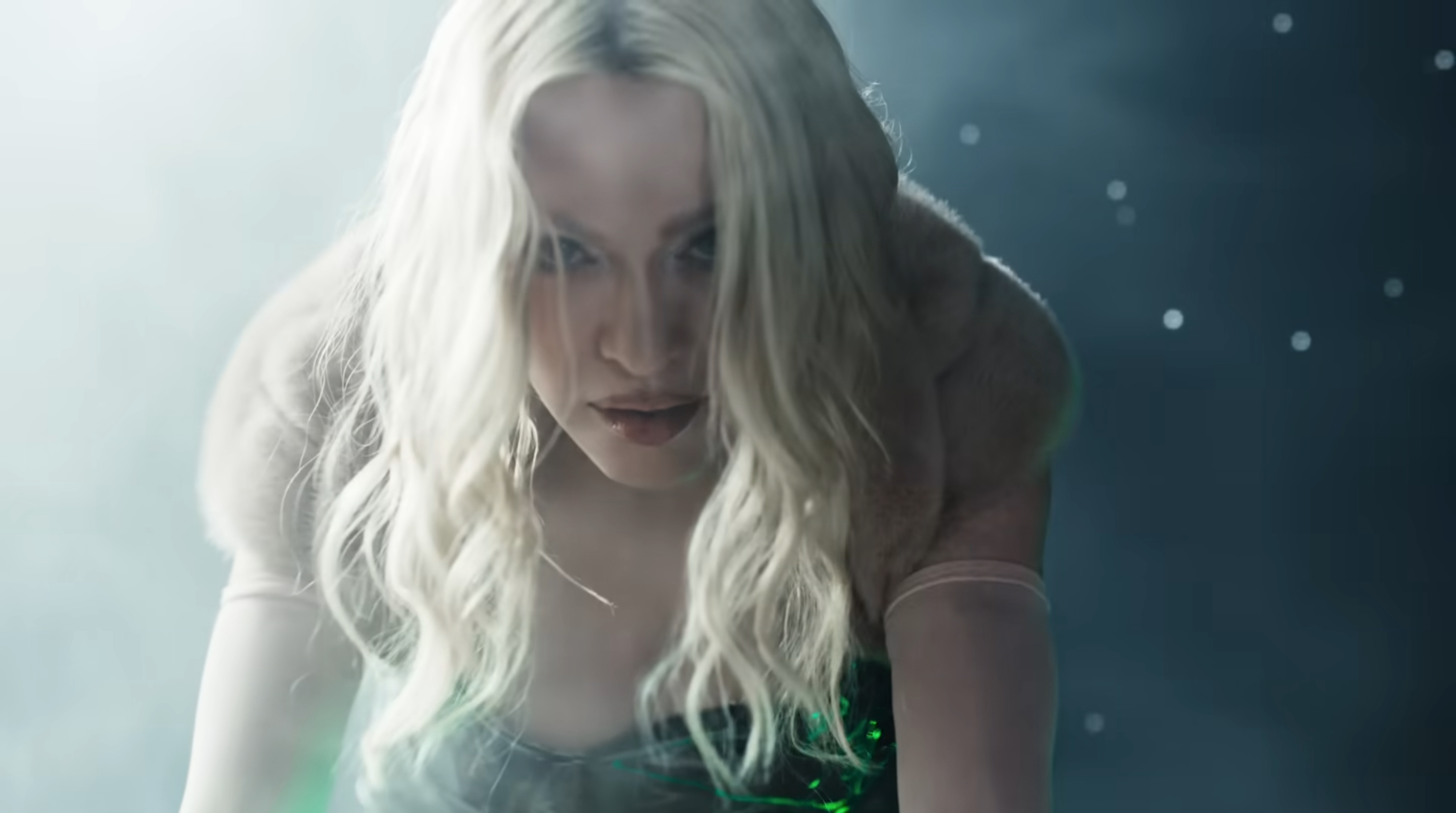
Benjamin Morse has a confession to make: from the devotion of the divine dancefloor.
Consider this a confession. Consider it two. The first involves my musings on the potentially trite topic of why the Queen of Pop has been such a significant figure for gay men. The second centres around my experience of her as a Christian forging his way through the fragmentation and rootlessness of contemporary life. I’m not sure it’s necessary or even possible to distinguish between the woman and the Artist. The personal with her isn’t so much political as it is her corseted craft. Widely regarded as a boundary-breaker, she is partly responsible for mainstreaming liberal ideas about autonomy, feminism and diversity. Given that shock and overt sexuality have been de rigueur since the 1960s, the trend-spotter and -setter is future-focused but no longer necessarily radical.
And yet. Beneath the brash, ever-changing personas and experiments in musical styles, a soul negotiates the present and, if you have eyes to see it, reaches for the eternal. She has brazenly carried on as a female pop artist long after 40, but it has been equally if not more against the grain of our secular age for her to grapple so openly with finding God. Give “Isaac” a listen and prove me wrong. From Like a Prayer and its closing track “Spanish Eyes” to lines she reads from Revelation and her adventures in Kabbalah and the Yoga Sutras, the pilgrimage has been constant. Even her children’s names evoke the religious realm, sounding or translating as follows: Lord, Rock (of the Church), David, Mercy, Star and Esther. She has been sailing to Byzantium since the day her mother died when she was five. Mine (also a blonde) only died when I was twenty-three but Madonna held a light for me through my mourning as much as she had through my coming out.
She invents, appropriates and adapts. And again, if one looks past the surface and into the sources, she surprises. It was no shallow dummy who gleaned a line from Whitman’s “Vocalism” (not the obvious one on “the divine power to speak words” but a subsequent one, “Surely whoever speaks to me in the right voice, him or her I shall follow”) and paired it with Genesis 1.2. Note also the fully monastic opening to her MDNA tour—a mix of Psalm 91 in Hebrew and a Basque chant on the Annunciation—and how she subtly revises the Act of Contrition. Instead of detesting her sins because they offend God, she detests them because she loves him. She therefore wants “so badly to be good.”
Her theocentrism emerges in flashes of lyrics and in more obvious uses of Catholic and other religious imagery, especially in her concerts. Her words are sometimes awkward, her grammar, ahem, errant, but elsewhere one encounters perfection. When sung they can hold a particular resonance for gays like me. Thus “Vogue” is ostensibly a tune about feeling glamorous. There is however deep pathos in the opening lines about escaping the pain of life that you know: “When all else fails and you long to be something better than you are today…”
No, Madonna is not explicitly directing anyone to Jesus. The place where we can get away is the dancefloor. (More on this below.) But she cuts to the heart of our condition, the desire to escape the ordinariness of being human. That “Vogue” was an homage to the Harlem drag balls made the sentiment all the more potent. She advocated for gays throughout the AIDS epidemic and has never neglected this fanbase. Make of it what you will, but part of the extended promo film for her valedictory album, Confessions II, even includes the Grindr logo on the inside of a bathroom stall.
“I’m on your side, so let me love you from the inside out.”
Is Madonna merely singing to her lover, or is Mamma Ciccone, in the voice of God above, addressing us all?
One hesitates to generalise about gay men and our tendency for strong, sometimes too strong, bonds with our mothers. Or about whether some of us have daddy issues. But somewhere above the chaos of whatever all that is—not to mention the challenge and blessing of navigating sex and love with limited role models and a whole lot of male libidos—has shone a maternal icon. If so many gays my age didn’t seem so bitter about her today, I would be inclined to say the way they dropped her as we grew older reflects the maturity of detaching from the mother. People, Madonna included, don’t like ageing. Yet ye of little faith, do we let ourselves become brittle, or do we accept death and continue to sing and dance and hope for God until we get there? “Cynical smile, time to take off your mask. I’m on your side, so let me love you from the inside out.” Is Madonna merely singing to her lover, or is Mamma Ciccone, in the voice of God above, addressing us all?
My more personal confession is this: I have spent my adult years privately applying theology to the Art of Madonna. I have approached each new album with something like faith, surrendering myself to whatever it might reveal or deliver. I have interpreted the unlikeliest of songs as dialogues between the soul and God—not because I think Madonna necessarily intended them as such, and not without occasionally having to suspend or bend a word to make it fit the I-Thou scenario. Forgive me therefore for determining that the “You Fill Me” version of “Erotica” from the 2006 Confessions tour unfolds uncannily as a serenade to the Almighty.
Yet I have no shame arguing that she follows in the tradition of Bernini’s The Ecstasy of Saint Theresa, positing a connection between the sensuous and the divine. Obviously the unchecked materialism and self-aggrandisement that course through her oeuvre defy the idea that she is a humble servant. (“I’m a bad girl anyway..”) But that doesn’t mean she hasn’t always been seeking or that she has not functioned as a kind of medium for those of us who have sought and/or found transcendence and love via two of her most prominent subjects: men and the dancefloor.
Escape, yes, but much more than that. (“In the evidence of its brilliance…”) A mentor once assured me, “A beautiful ass can be spiritual.” Carnality as not purely profane. Pop music as a portal. The dancefloor as a metaphor for life, and with it a choice. To be alone in the crowd, desperate to be desired, something better than I am today. Or to rock along to the infectious beat, immersed in the multitude, happy to be who God made me. Music, after all, makes the people come together.
All brought to us by a mother figure who approaches sex like a gay man. Strings of lovers, heartbreaks and peacockery. (“Everyone here is a work of art,” she raps in “Danceteria”.) A modern woman who was raised Catholic and travelled down her own syncretistic road. Full of the knowledge, in the demonstration of the evidence, that God loved her first. A feminine compliment or antidote/alternative to the patriarchal Logos (see especially “Bedtime Story”), somehow specifically appealing to gays and confident women. And if that sounds far-fetched, here’s how she describes the dancefloor in the third sequence of the promo video: “a threshold, a ritualistic space where movement replaces language. One step away from your freedom. One step away from the dance of blood.”
On the opening track to this final album she sings how she gets so lonely she can’t take it no more. But on the dancefloor, she feels so free.
Freedom from feeling alone. Freedom to live this life till our dying day. The ultimate gift God gives us. Pre-political, historically validated in the Exodus and the Resurrection. I am probably a very special gay to have my head in such clouds but I refuse to be a bitchy one. With the release of Confessions II I feel once more like I just got home. To quote a line from it, “Honestly I wish I could be like other people and just not care.” But care I do. And because I care about God, I am inclined to be generous about the figure my generation of gays raised up as Our Lady, who in her American Life phase sang, “I’m not religious, but I feel so moved. Makes me want to pray.” The ambiguous state of the soul and the fragile state of identity and the Church. It’s where we’re at.
And if she has sported a Protect the Dolls t-shirt and featured trans performers, well, the slogan may be misinformed and the unisex bathroom with the Grindr logo a fantasy that evades certain issues many of us are concerned about. But it is a performance, and it has grown on me since the clip of it got ridiculed on X. It is a chapter in a sexy techno story that suggests dance as a means to overcome difference while inclining once again towards spiritual ascent. It is music. Excellent unapologetic house music, if you unfreeze your heart and give yourself to it. It’s where she’s at.

“Madonna somersaults over the threshold between heaven and earth in “Bring Your Love”.
We are miles away from the voice that gave us “Borderline” and “Cherish”, although that one brought heavenly joy as well. Madonna at 67 sounds more seasoned, incants like a sage in fishnets and Dolce & Gabbana PVC. “Everything begins with consciousness,” she says at the beginning of “Good for the Soul”. Then sings:
We will be one, we’ll all be divine. All of the spirits, they’ll all intertwine.
Don’t forget that it’s good for the soul to let down your hair and breath in the air.
The ones that you love will keep you above.
It’s the musical artistry and the total works of art she creates (I use the term Gesamtkunstwerk here without reservation). It’s the places a synthesiser, strings and a trance beat can take you—not if you just have it on in the background, but if you surrender and seek. Not if you give the new track a single hasty listen and petulantly decide it’s no “Into the Groove”. When the effect is not instant gratification, I’ll play it again and leave it for a few days. Almost always a phrase comes back to me (this time it was what happens from 3m 56s of “I Feel So Free”) and suddenly I’m playing the track on repeat. There is a moment, maybe not straight after the album drops but eventually, like a revelation, when I begin to come up to the whole thing. And soon, in my devotion, I am tripping once more on Madonna, on God, on the gift of life.
A prelude to the glory. “Come and get salvation, all God’s children can be saved.” One day He’ll call our name and it will feel like home.
 Benjamin Morse
Read Benjamin’s first article for LGB Christians which includes his biography, Paradise Calling: Inclusive Church and the Masquerade of Good Intentions. Read his subsequent pieces including an interview with Diarmaid McCulloch.
Listen to Benjamin speak about his journey from activism to Substack satirist in a full hour interview with Matt Osbourne of The Distance. It includes encounters with trans activists, jailtime with BLM chauvinists, and unfiltered thoughts about living openly as a gay Christian.