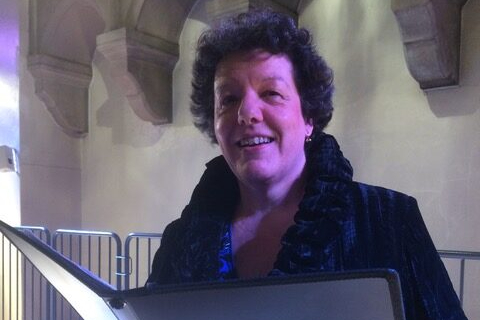
Fifty years ago I was forced to leave my girls’ grammar school, just after O Levels, and the church choir in which I was Head Chorister, after reporting what would now be called ‘grooming and sexual abuse’ by an employee of both institutions. In the last few years, I have received compensation payments from both the Church of England and the relevant County Council in recognition of the educational, psychological and reputational damage done to me, not just by the abuse itself, but the way in which my disclosure was dealt with by professionals at the time.
Since receiving compensation from the Church, I have been part of a ‘Survivors’ Forum’, led by the Central Safeguarding Team, and have taken part in safeguarding training in my own current church, in which I am a member of the choir and the PCC.
The more I see of safeguarding in the Church, the more cynical I become.
It would seem likely that someone like me would be fully supportive of the Church’s attempts to improve ‘safeguarding’ of children, young people and vulnerable adults, but I am afraid that the more I see of ‘safeguarding’ in the Church, the more cynical I become.
As a retired civil servant, I can see that, in common with most of the public sector (and many of the lay safeguarding staff in the C of E have come from local authorities) an obsession with ‘process’ has taken over from providing real support to victims, and the priority appears to be to protect the organisation from litigation by people like me by producing evidence that all the boxes have been ticked. I have also heard anecdotal evidence from other victims that the Church is ‘on a mission’ to drag historical cases out of the woodwork to prove that it is no longer the Church that saw its leading cleric resign over child abuse.
The elephant in the room in terms of ‘safeguarding’, however, is the way in which ‘gender’ ideology has permeated the Church and, particularly, the safeguarding teams. There was even talk, on a recent ‘Survivors’ Forum’ of making safeguarding policy ‘gender neutral’, which would be extremely dangerous.
Making safeguarding policy gender neutral would be extremely dangerous
It is quite obvious, from press reports about child abuse in all kinds of institutional settings, and from the testimonies available on the IICSA website, that the overwhelming number of abusers, of both girls and boys, are male. It is also apparent, in the Church, that there is a hierarchy of abuse victims. Pre-pubescent, upper middle class, privately educated boys are at the top, and working class, state-educated, teenaged girls are at the bottom. I think it goes without saying that the Archbishop of Canterbury would never have been forced to resign over abuse in a state secondary school full of working class teenaged girls.
Rather than carrying out appropriate due diligence around men in positions of responsibility, however, the Church’s policies on ‘safeguarding’ appear to concentrate on restricting the activities of teenagers and subjecting them to humiliating and infantilising surveillance, as well as expecting and assuming the involvement of their parents in church-based activities in which they take part. Whilst middle class teenagers may be prepared to tolerate this up to a point, and middle class parents may have the time, confidence and transport to be involved, working class teenagers, who often have far more freedom and responsibility at home, will not. This result of this will be the exclusion of working class teenagers, either because they have self-excluded, or because their parents are not in a position to be involved to the level expected. In an era when working class teenagers are becoming increasingly alienated by school, possibly for the same reasons, the Church is not providing them with the support and activities that it should.
Many of us recall Church youth clubs and other activities, which not only gave us a social life, and often music or sports teams, as young people, but encouraged teenagers into a Church environment and to explore faith. In most churches, this is no longer happening, particularly for working class teenagers.
The detrimental effect of the church’s capture by gender ideology is that they (children) are being told lies
The other detrimental effect on the safety of children, particularly young children, of the Church’s capture by ‘gender’ ideology is, of course, that they are being told lies. Young children (below approximately thirteen) do not possess the cognitive ability to distinguish between biological sex and the extremely abstract concept of ‘gender identity’. Some never will. A child who is told that being a boy or girl is a choice will take literally the idea that it is biological sex that can be chosen. When that message comes from a member of the clergy, it is a powerful one that even older teenagers may feel unable to question.
When a child is told that an adult or older teenager in a church situation is a woman or girl, when he is clearly male, they will question their own judgement in other situations. The most rigorous and restricting safeguarding protocols possible in a church environment will not protect a child in another environment, such as a swimming pool changing room.
It is ironic that the mainstream Church of England does not compel belief in any aspect of Christian faith but, in embracing and enforcing ‘gender’ ideology, is compelling both children and adults to believe in the articles of a secular, fashionable, and, frankly, sinister cult. The Church’s efforts to redeem itself from the scandals that brought down the former Archbishop will come to naught while it continues to embrace and promote this dangerous ideology.
Caroline Watson
Caroline Watson is a member of the choir and the PCC at a large parish church in the North of England. She is a retired Defra civil servant who, as a union representative, studied employment and equality law at postgraduate level and won a considerable number of cases for unjustly treated union members. She resigned from her union, a year before her retirement, because of its aggressive embrace of ‘gender’ ideology and disregard for its female members .
As well as LGB Christians, she is a member of the gender-critical feminist campaigning group Sex Matters and defines herself as a traditional, working class, equality feminist.